What Is Accounting Backlog Cleanup?
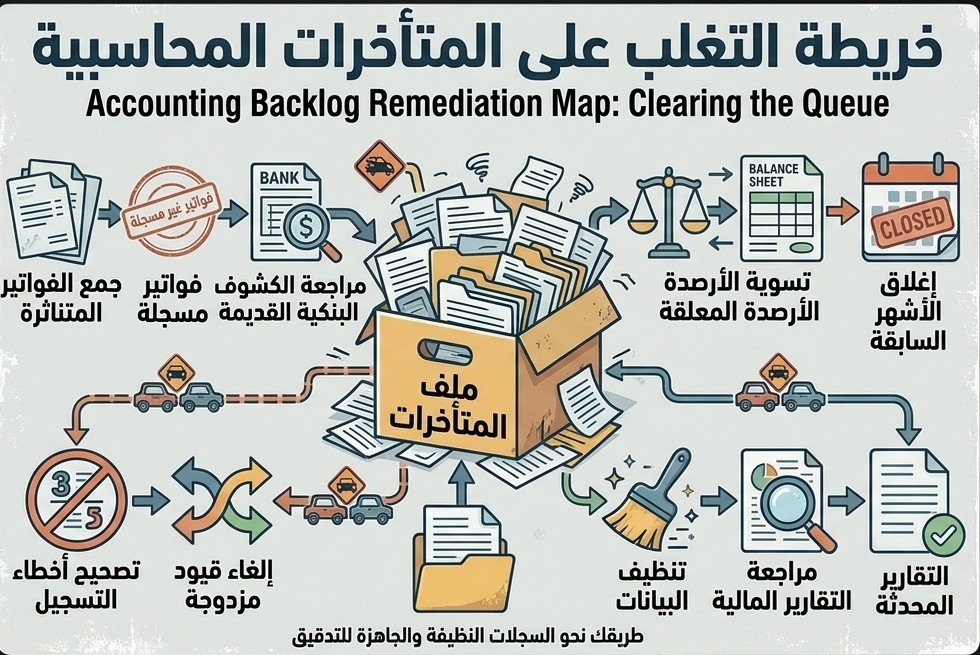
Accounting backlog cleanup means reviewing, entering, and correcting accounts for previous periods that were not recorded or were not properly closed.
The service may cover one month, several months, a full financial year, or more than one year, depending on the company’s condition, the number of documents, bank accounts, customers, and suppliers.
The goal is to reach reliable balances that can be used for management, VAT, Corporate Tax, financial statements, audit, banks, or admitting a new partner.
The difference between accounting cleanup and accounting correction is that cleanup usually starts from unrecorded documents or periods not properly closed, while correction deals with errors inside accounts that already exist.
When Does a Company Need Accounting Backlog Cleanup?
Unclosed Accounts
When months or years pass without proper accounting closing or reliable financial reports.
Unreconciled Banks
When many bank statements have not been matched with books, invoices, receipts, or payments.
Old Balances
When customers, suppliers, or shareholders have old balances and no one knows why they exist or whether they are correct.
Delayed VAT Records
When VAT invoices or returns need to be reviewed and linked with old accounting records.
Corporate Tax
When the company needs correct accounting profit and organized periods before preparing the Corporate Tax file.
Audit or Financial Statements
When financial statements, audit, bank reports, or partner reports are required while previous periods are not ready.
Why Accounting Backlogs Accumulate
Accounting delays happen for many reasons. Sometimes there is no regular accountant, the accounting system was changed, documents were missing, the company relied only on bank statements, or the review was postponed until year-end.
- Invoices were not entered regularly.
- The accountant or accounting system changed.
- No proper document filing system was maintained.
- Only bank movements were recorded without detailed invoices.
- Customers and suppliers were not reconciled.
- VAT review was postponed until the filing deadline.
- Owner personal expenses were mixed with company expenses.
- Several bank accounts existed without reconciliation.
- Inventory or cost of sales was not followed up.
- Payroll, loans, and fixed assets were not recorded correctly.
- Old periods accumulated without monthly closing.
The longer the delay, the harder it becomes to link invoices with banks, receipts, and payments. It is better to start the cleanup before full years accumulate.
Collecting Documents and Building the File
The first step in accounting backlog cleanup is collecting available documents and organizing them by period, type, and account. Reliable accounts cannot be built without knowing what is available and what is missing.
- Bank statements.
- Sales and purchase invoices.
- Receipt and payment vouchers.
- POS or payment gateway reports.
- Customer and supplier statements.
- Previous VAT returns, where available.
- Payroll and salary transfer records.
- Loan and finance documents.
- Inventory and stock count reports.
- Fixed asset invoices.
- Contracts, leases, and important agreements.
- Any previous accounting files or Excel sheets.
Rebuilding Accounts from Bank Statements
When accounts are delayed or documents are not organized, bank statements are often the starting point for rebuilding financial movements. However, the bank alone is not enough because it shows cash movement but does not explain the nature of each transaction.
Every bank movement should be linked with an invoice, customer, supplier, expense, loan, internal transfer, or shareholder account.
- Download bank statements for all delayed periods.
- Classify receipts and payments.
- Link receipts with customers and invoices.
- Link payments with suppliers and expenses.
- Identify transfers between company accounts.
- Identify unknown movements.
- Record bank charges, card charges, and transfer fees.
- Review issued and received cheques.
- Match POS and payment gateways with the bank.
Rebuilding accounts from the bank is useful, but it does not replace invoices and documents, especially for VAT and Corporate Tax.
Entering Old Sales and Purchase Invoices
After organizing bank movements, old sales and purchase invoices should be entered and linked with the correct periods. This is important so revenue, expenses, and taxes appear in the proper accounting period.
- Arrange sales invoices by date and number.
- Enter cash and credit sales invoices.
- Enter purchase and expense invoices.
- Review tax invoices and supplier details.
- Enter credit notes and returns.
- Link invoices with receipts and payments.
- Identify missing or duplicated invoices.
- Separate company invoices from personal expenses.
Correcting Customers and Suppliers for Previous Periods
One of the main problems in delayed accounts is the appearance of unexplained customer and supplier balances. Receipts may not be linked with invoices, supplier payments may be recorded as direct expenses, or advance payments may remain unsettled.
- Prepare a statement for each customer and supplier.
- Match invoices with receipts and payments.
- Identify old and unexplained balances.
- Settle advance payments.
- Record credit notes and discounts.
- Review duplicated or cancelled invoices.
- Analyse ageing reports.
- Prepare correct opening balances for the new period.
Organizing VAT for Previous Periods
When cleaning up delayed accounts for a VAT-registered company, sales invoices, purchase invoices, credit notes, and previous returns should be reviewed to confirm that accounting figures can be reconciled with the VAT file.
Where the company is not registered for VAT, it may be important to review the value of taxable supplies and imports for previous periods to understand whether VAT registration or threshold monitoring was required.
- Collect VAT invoices issued and received.
- Match VAT with sales and purchase invoices.
- Review credit notes and returns.
- Reconcile previous VAT returns with accounts.
- Identify differences that need review or correction.
- Review imports and exports where applicable.
- Prepare a supporting document file for previous periods.
- Monitor VAT registration threshold for unregistered companies where needed.
Organizing Accounts for Corporate Tax
Corporate Tax starts from accounting income as per the financial statements, with required adjustments. A reliable Corporate Tax file cannot be prepared when previous accounts are not organized.
Accounting backlog cleanup helps identify correct revenue and expenses, unsupported expenses, fixed assets, depreciation, advance payments, loans, shareholder accounts, and related party transactions where needed.
- Prepare profit or loss for each period.
- Review revenue and expenses.
- Separate personal or mixed expenses.
- Review unsupported expenses.
- Record fixed assets and depreciation.
- Review loans, advances, and shareholder accounts.
- Review related parties where needed.
- Prepare initial figures for the Corporate Tax file.
Inventory and Fixed Assets in Delayed Accounts
If the company has inventory, accounting backlog cleanup is not complete without reviewing inventory movement and cost of sales. If the company has fixed assets, the fixed asset register and depreciation should be prepared.
- Review inventory purchases and sales.
- Identify opening and closing stock.
- Calculate cost of goods sold.
- Review stock count reports where available.
- Identify damaged, obsolete, or returned stock.
- Prepare the fixed asset register.
- Record depreciation for previous periods.
- Separate fixed assets from operating expenses.
Payroll, Loans, and Shareholder Accounts
In delayed accounts, many movements related to payroll, employee advances, loans, and shareholder accounts may appear unclear, especially where personal transfers or expenses paid by the owner exist.
- Match payroll with bank transfers.
- Record paid or accrued salaries.
- Review employee advances and deductions.
- Record loans and finance instalments.
- Classify shareholder and owner transfers.
- Separate personal withdrawals from company expenses.
- Record expenses paid by the owner on behalf of the company.
- Review intercompany accounts where needed.
Moving Accounts to an Organized Accounting System
Sometimes old accounts are kept in Excel, incomplete files, or an accounting system that was not used properly. In this case, the data can be reorganized and moved to a clearer accounting system.
- Prepare a chart of accounts suitable for the activity.
- Enter correct opening balances.
- Enter previous invoices and movements.
- Organize customers, suppliers, and items.
- Link banks and cash accounts.
- Prepare monthly or annual reports.
- Deliver an organized file that can be continued in the future.
Accounting backlog cleanup should end with a system that can continue, not only a temporary file to solve an old problem.
Documents Required for Accounting Backlog Cleanup
- Bank statements for all delayed periods.
- Sales and purchase invoices.
- Sales reports from POS, e-commerce platform, or sales system.
- Receipt, payment, and transfer documents.
- Customer and supplier statements.
- Previous VAT returns where available.
- Inventory and stock count reports where available.
- Fixed asset invoices.
- Payroll and salary transfer records.
- Lease, loan, and finance agreements.
- Any previous Excel files or accounting system data.
- Trade licence and activity details.
- Any notes from the auditor, FTA, bank, or management.
Steps to Clean Up Accounting Backlog
- Identify the delayed periods to be organized.
- Collect documents, bank statements, and previous files.
- Assess the condition of the accounts and identify missing items.
- Prepare an entry and review plan based on priority.
- Enter sales and purchase invoices.
- Reconcile banks and cash movements.
- Match customers, suppliers, receipts, and payments.
- Review VAT for previous periods.
- Review inventory, fixed assets, payroll, and loans.
- Prepare correction and adjustment entries.
- Prepare a trial balance and reports for previous periods.
- Deliver an organized file that can be relied upon in the future.
Common Mistakes in Accounting Backlog Cleanup
- Entering totals only without detailed invoices.
- Relying only on the bank statement to identify revenue and expenses.
- Clearing differences with general entries without explanation.
- Not linking receipts with customers and payments with suppliers.
- Ignoring VAT and previous tax periods.
- Not separating personal expenses from company expenses.
- Not recording fixed assets and depreciation correctly.
- Ignoring inventory and cost of goods sold.
- Not keeping documents after cleaning up the accounts.
- Entering incorrect opening balances for the new period.
- Not preparing a report showing differences and missing documents.
- Continuing the same old process after the cleanup is completed.
The biggest risk in delayed accounts is fixing the problem only on the surface using opening balances or general entries, while bank, customer, supplier, and tax details remain unclear.
Reports You Receive After Cleanup
- Trial balance for the organized periods.
- Profit or loss report by period.
- Bank reconciliation report.
- Customer and ageing report.
- Supplier and accounts payable report.
- VAT and tax difference report where needed.
- Inventory and fixed asset report where applicable.
- Unsupported or missing expense report.
- Correction and adjustment entries report.
- List of notes, missing documents, and recommendations.
Who Needs This Service?
- Companies that have not closed accounts for several months or years.
- Companies that want to file VAT or Corporate Tax based on correct figures.
- Companies preparing for financial statements or audit.
- Companies that changed the accountant or accounting system.
- Companies relying only on bank statements.
- Companies with old unexplained balances.
- Companies with disorganized invoices and documents.
- Companies preparing for a new partner or financing.
- Companies that want to restart with organized accounts.
- Companies that want to move to a better accounting system.
How Can Al Basma Help with Accounting Backlog Cleanup?
Al Basma reviews delayed periods, collects documents, enters invoices and movements, reconciles banks, corrects customer and supplier balances, and reviews VAT and Corporate Tax.
We prepare correction and adjustment entries, issue a trial balance and clear reports for previous periods, and explain differences, missing documents, and required actions.
We also help the company continue after the cleanup by setting up a clearer accounting system, better document cycle, and monthly review that prevents the same issue from accumulating again.
Services Related to Accounting Backlog Cleanup
Why Choose Al Basma for Accounting Backlog Cleanup?
- Organize accounts from documents and banks, not random figures.
- Reconcile banks, customers, suppliers, and old invoices.
- Review VAT and Corporate Tax for previous periods.
- Prepare a trial balance and clear reports after cleanup.
- Identify differences, missing documents, and required entries.
- Set up an accounting process that helps prevent the problem from repeating.
Important Notice:
The information provided on this page is intended for general informational purposes only and does not constitute legal, tax, accounting, or professional advice. It should not be relied upon as a substitute for reviewing the applicable laws, regulations, decisions, and official guidance issued by the competent authorities in the United Arab Emirates.
The appropriate legal, tax, or accounting treatment may vary depending on the specific facts and circumstances of each case.
If you require professional advice or assistance relating to your particular situation, please contact us and our team will be pleased to review your case and provide appropriate support.
Related Updates and Articles