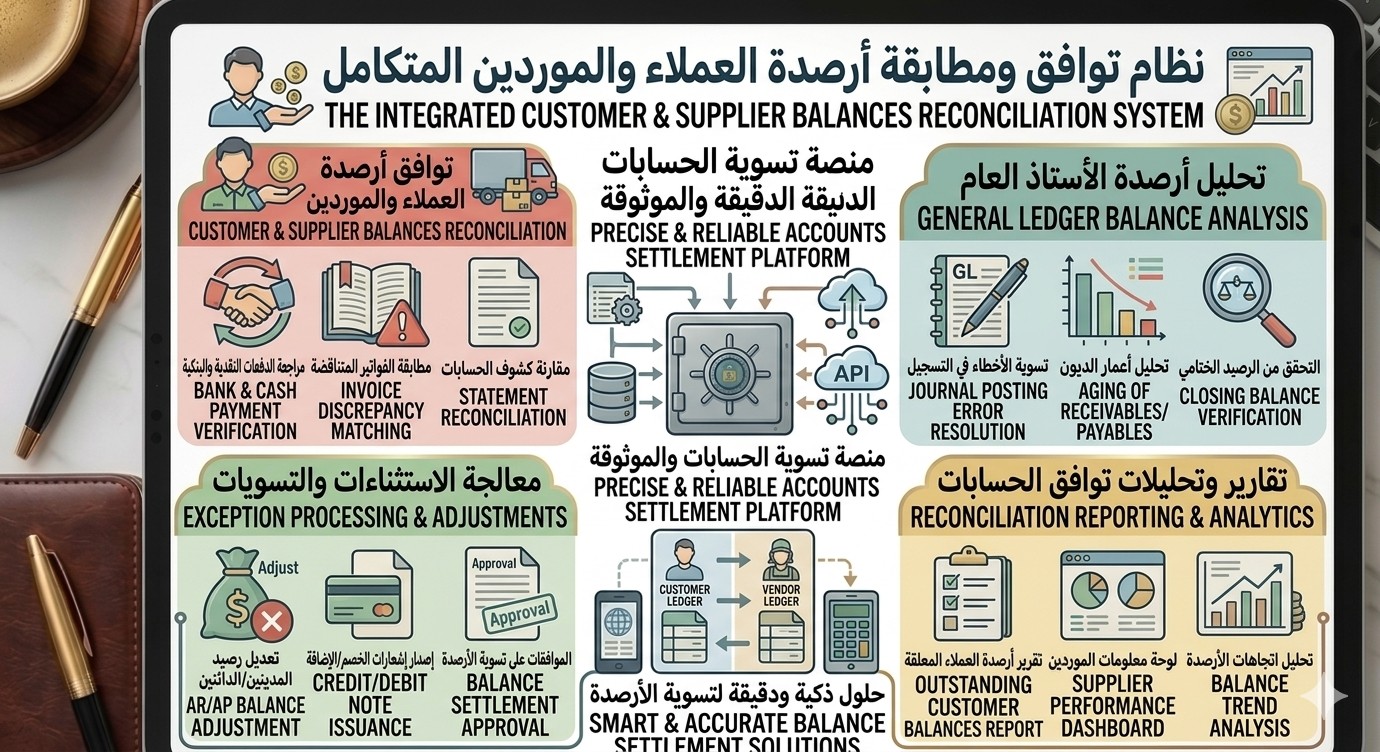
What Is Customer and Supplier Balance Correction?
Customer and supplier balance correction means reviewing the account statements in the books and matching them with invoices, receipts, payment vouchers, bank statements, credit notes, discounts, returns, and advance payments.
The purpose is not only to know the final balance. The purpose is to understand why the balance exists, whether it is collectible or payable, whether there are duplicated invoices, unlinked payments, receipts recorded in the wrong account, or old unexplained balances.
When customer and supplier balances are correct, management can make better decisions about collections, payments, pricing, credit limits, supplier settlement, and cash flow.
The common mistake is looking at the total customer or supplier balance only, without analysing the invoices and movements that created that balance.
When Does a Company Need Customer and Supplier Balance Correction?
Old Unexplained Balances
When old customer or supplier balances exist and no one knows why they remain or whether they are correct.
Unlinked Receipts
When amounts appear in the bank but are not linked with customer invoices or were recorded in wrong accounts.
Unsettled Payments
When suppliers have been paid but their balances remain open because payments were not matched with the correct invoices.
Invoices and Returns
When credit notes, discounts, or returns were not recorded or not linked with the correct customer or supplier.
VAT and Corporate Tax
When preparing VAT or Corporate Tax files and confirming that invoices, receipts, and payments are supported.
Financial Statements or Audit
Before preparing financial statements or submitting accounts to an auditor, partners, or bank.
Customer Balance Correction
Customer balances represent amounts due to the company for sales invoices, services, or work already performed. These balances may become incorrect if receipts are not linked with invoices, or if discounts, credit notes, or returns are not recorded.
A customer may appear as owing money even though payment was received, or a customer may show a zero balance while some invoices are still uncollected. An advance payment may also remain open without settlement against the invoice.
- Matching customer invoices with receipts.
- Linking every receipt or bank transfer with the correct invoice.
- Identifying uncollected invoices.
- Reviewing customer advance payments.
- Recording discounts, settlements, and credit notes.
- Analysing ageing by invoice date.
- Identifying duplicated or cancelled invoices.
- Identifying disputed or doubtful amounts.
- Preparing a clear statement for each customer.
Supplier Balance Correction
Supplier balances represent amounts payable by the company for purchase invoices, services, or expenses. These balances may become inaccurate if payments are not linked with invoices, or if an expense is recorded directly without clearing the supplier balance.
Differences may also result from supplier credit notes, discounts, returns, advance payments, or supplier invoices that were paid through the bank but not recorded correctly in the supplier account.
- Matching supplier invoices with payments.
- Linking every transfer, cheque, or payment with the correct invoice.
- Identifying due and unpaid supplier invoices.
- Reviewing advance payments to suppliers.
- Recording credit notes, discounts, and returns.
- Identifying duplicated or unapproved invoices.
- Reconciling supplier balances with supplier statements.
- Identifying expenses recorded without valid tax invoices.
- Preparing a clear statement for each supplier.
The bank may be correct while supplier balances are wrong if a payment is recorded as a direct expense instead of being cleared against the supplier invoice.
Ageing Reports and Overdue Collections
An ageing report helps the company identify recent and old invoices, what should be followed up immediately, and what may require settlement, provision, or collection action.
A clear ageing report helps management improve cash flow, identify delayed customers, review credit limits, and reduce the risk of uncollected debts.
- Invoices due within 30 days.
- Invoices from 31 to 60 days.
- Invoices from 61 to 90 days.
- Invoices over 90 days.
- Old invoices requiring commercial or legal follow-up.
- Amounts under dispute with customers.
- Customers with unsettled advance payments.
- Provisions or doubtful debts where needed.
Credit Notes, Discounts, and Returns
Credit notes, discounts, and returns are common reasons for differences in customer and supplier balances. A discount may be agreed with a customer, goods may be returned, or a supplier may issue a credit note, but the accounting records may not be updated correctly.
These documents should be linked with the original invoice, reflected in the customer or supplier statement, and reviewed for their VAT and financial reporting effect.
- Credit notes issued to customers.
- Credit notes received from suppliers.
- Commercial discounts or price settlements.
- Sales returns or purchase returns.
- Cancelled or amended invoices.
- Linking the credit note with the original invoice.
- Reviewing VAT effect of credit notes.
- Correcting customer or supplier balance after settlement.
Advance Payments from Customers and to Suppliers
Advance payments need separate tracking because they are not always final revenue or final expense at the time of payment. A customer may pay before the invoice is issued, or the company may pay a supplier before receiving goods or services.
If advance payments are not tracked, revenue or expenses may appear incorrectly, and balances may remain open for years without settlement.
- Advance payments received from customers.
- Advance payments made to suppliers.
- Linking advance payments with contracts or purchase orders.
- Settling the advance when the invoice is issued.
- Partial invoices or project milestones.
- Remaining balances after settlement.
- Amounts to be refunded or deducted.
- Reviewing accounting and tax treatment based on documents.
An advance payment is not always final revenue or expense. It should be linked with the contract, invoice, supply, or service performed.
Connection Between Balances and Bank Reconciliation
Customer and supplier balance correction is directly connected with bank reconciliation. Every customer receipt or supplier payment should appear in the bank and in the correct customer or supplier account.
If bank reconciliation is completed without linking movements with customers and suppliers, the bank account may be correct while the detailed balances remain wrong.
- Linking every bank receipt with a specific customer.
- Linking every bank payment with a specific supplier.
- Matching issued and received cheques.
- Settling unknown transfers.
- Correcting receipts recorded as direct revenue.
- Correcting payments recorded as direct expenses.
- Matching the bank statement with customer or supplier statements.
Effect of Customer and Supplier Balances on VAT
VAT does not depend only on customer or supplier statements, but it is affected by correct invoices, credit notes, returns, and tax periods. Customer and supplier balances should therefore be supported by proper tax documents.
Where invoices are missing, credit notes are not linked, or payments do not have valid tax invoices, the VAT file may become incomplete or unsupported.
- Matching sales invoices with customer balances.
- Matching purchase invoices with supplier balances.
- Reviewing credit notes and returns.
- Identifying missing or unsupported invoices.
- Reviewing input VAT on supplier invoices.
- Preparing a supporting document file for VAT filing.
Effect of Balances on Corporate Tax
Corporate Tax depends on correct profit, and correct profit cannot be identified if revenue, expenses, advance payments, or old debts are not classified properly.
Correcting customer and supplier balances helps identify accrued revenue, accrued expenses, doubtful debts, duplicated invoices, and unsupported expenses.
- Identifying recorded but uncollected revenue.
- Identifying accrued and unpaid expenses.
- Reviewing old and doubtful debts.
- Separating advance payments from revenue and expenses.
- Identifying duplicated invoices or wrong entries.
- Improving the accuracy of financial statements and taxable income.
Documents Required to Correct Balances
- Customer ledger from the accounting system.
- Supplier ledger from the accounting system.
- Sales and purchase invoices.
- Receipt and payment vouchers.
- Bank statements.
- Credit and debit notes.
- Return and discount documents.
- Customer and supplier contracts where needed.
- Purchase orders and sales orders.
- Statements from customers or suppliers.
- Advance payment and settlement details.
- Previous VAT returns and Corporate Tax file.
Steps to Correct Customer and Supplier Balances
- Identify the period to be reviewed.
- Extract customer and supplier statements from the accounting records.
- Match invoices with receipts and payments.
- Link bank movements with customers and suppliers.
- Review advance payments and settlements.
- Review credit notes, returns, and discounts.
- Analyse ageing reports and old invoices.
- Compare the statement with the other party where needed.
- Identify differences and their causes.
- Prepare the required correction or settlement entries.
- Update final balances after correction.
- Prepare a clear report for management with notes and recommendations.
Common Mistakes in Customer and Supplier Balances
- Recording receipts as revenue without clearing customer balances.
- Recording payments as expenses without clearing supplier balances.
- Leaving advance payments unsettled for long periods.
- Not recording credit notes or returns.
- Keeping duplicated or cancelled invoices in the statement.
- Not reconciling the customer or supplier statement with the other party.
- Carrying incorrect opening balances from previous years.
- Mixing customers or suppliers with similar names.
- Not analysing ageing and overdue collections.
- Not keeping sufficient documents for invoices and settlements.
- Preparing VAT or Corporate Tax before correcting balances.
- Clearing differences with a general entry without knowing the real cause.
The biggest risk in customer and supplier balances is that totals may look correct, while the details of each customer or supplier do not match invoices and bank movements.
Reports You Receive After Correction
- Customer balance report after correction.
- Supplier balance report after correction.
- Uncollected customer invoice report.
- Unpaid supplier invoice report.
- Advance payments from customers and to suppliers.
- Credit notes and returns report.
- Ageing and collection report.
- Difference report and reasons.
- Required correction entries.
- Recommendations to improve collection, payment, and control.
Who Needs This Service?
- Companies with many customers or suppliers.
- Companies with old unexplained balances.
- Companies using credit sales or credit purchases.
- Companies with many receipts and payments.
- Companies with advance payments or ongoing contracts.
- Companies with frequent returns or discounts.
- Companies preparing for VAT or Corporate Tax filing.
- Companies preparing for financial statements or audit.
- Companies that want to improve collections and cash flow.
- Companies correcting accounts before expansion or admitting a partner.
How Can Al Basma Help with Balance Correction?
Al Basma reviews customer and supplier ledgers, links invoices with receipts and payments, matches movements with banks and documents, then identifies differences and their causes.
We prepare the required correction entries, settle advance payments, review credit notes and returns, and prepare ageing and collection reports.
We also prepare a clear report showing balances after correction, differences, required entries, and notes that help management improve collection, payment, and VAT and Corporate Tax files.
Services Related to Customer and Supplier Balance Correction
Why Choose Al Basma for Customer and Supplier Balance Correction?
- Match invoices with receipts, payments, and bank movements.
- Identify old balances and unexplained differences.
- Correct advance payments, credit notes, and returns.
- Analyse ageing reports and overdue invoices.
- Prepare supporting files for VAT, Corporate Tax, and financial statements.
- Provide a clear report with balances after correction and required entries.
Important Notice:
The information provided on this page is intended for general informational purposes only and does not constitute legal, tax, accounting, or professional advice. It should not be relied upon as a substitute for reviewing the applicable laws, regulations, decisions, and official guidance issued by the competent authorities in the United Arab Emirates.
The appropriate legal, tax, or accounting treatment may vary depending on the specific facts and circumstances of each case.
If you require professional advice or assistance relating to your particular situation, please contact us and our team will be pleased to review your case and provide appropriate support.
Related Updates and Articles