

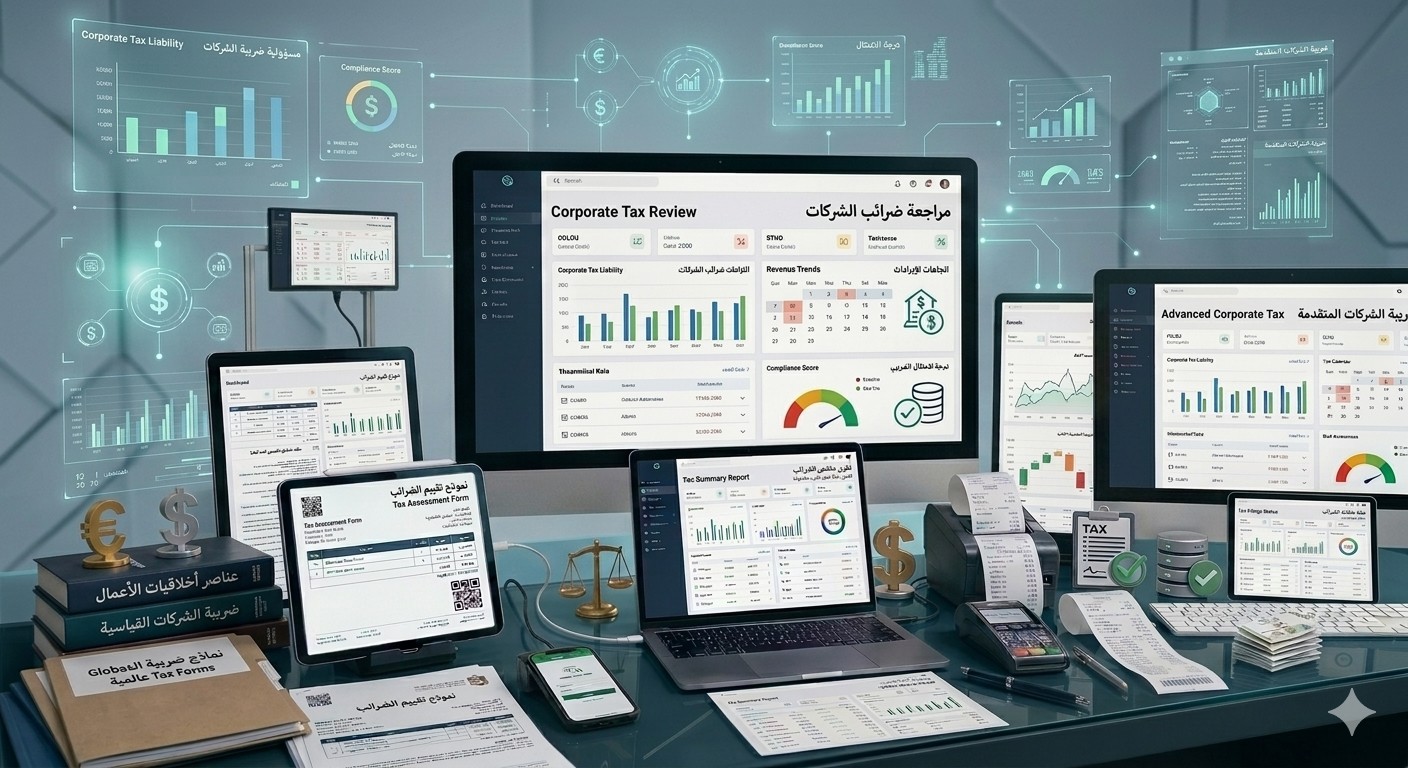
Filing a Corporate Tax return is not simply a matter of entering the accounting profit figure. Before filing, the company should review its financial statements, taxable income, expenses, tax losses, related party transactions, owner or management transactions, and supporting documents.
A company may have an accounting profit, but taxable income may require adjustments. A company may also expect no Corporate Tax payable, but it may still need to file the return and maintain proper records and supporting information.
Al Basma helps companies review their Corporate Tax position before filing and prepare a clear file connecting financial statements, accounting records, supporting documents, and tax analysis.
A Corporate Tax position review is an organized review of the company’s tax position before filing the return. The purpose is to confirm that figures extracted from the accounts and financial statements have been treated correctly for UAE Corporate Tax purposes.
This review is not limited to calculating tax only. It includes reviewing revenue, expenses, related party transactions, tax losses, free zone status, and any items that may require tax adjustments.
The objective is for the company to clearly understand its position before filing: is there tax payable? are there losses? are there non-deductible expenses? are there related party transactions? does the file need additional documents?
We review the income statement, balance sheet, trial balance, and general ledger to check whether the accounts are ready as a basis for Corporate Tax return preparation.
We review revenue, income sources, taxable income, and income requiring special review such as free zone income or foreign income.
We review deductible and non-deductible expenses, personal or unsupported expenses, and their impact on taxable income.
We review transactions with shareholders, owners, managers, group companies, and connected persons, and assess whether documentation or disclosure may be required.
We review the company’s free zone status, income type, activities, customers, and documents needed to determine the appropriate Corporate Tax treatment.
We review taxable income, tax losses, available reliefs or exemptions, and any tax credits that may affect the final Corporate Tax payable.
Before filing, a clear file should be built starting from the accounts and ending with the final figures that will appear in the Corporate Tax return.
Trial balance, income statement, balance sheet, general ledger, revenue and expense details, fixed asset schedules, and depreciation details.
Invoices, contracts, purchase orders, agreements, customer and supplier statements, and any document supporting revenue or expenses.
Bank statements, bank reconciliations, loans, interest, financing records, and significant amounts that need explanation.
Schedules of transactions with owners, shareholders, managers, and related companies, including balances, payments, services, and loans.
Trade licence, memorandum of association, tax registration details, ownership structure, and any changes during the tax period.
For free zone companies, we review the licence, activities, customers, income sources, and documents supporting the relevant Corporate Tax treatment.
A Corporate Tax review usually starts with the accounting net profit or loss according to the financial statements. Then, items requiring tax adjustments are reviewed, such as certain non-deductible expenses, related party transactions, losses, exemptions, or items with special tax treatment.
This means the company needs a clear reconciliation showing how accounting profit was converted into taxable income, which items were adjusted, why they were adjusted, and what documents support the treatment.
Having this reconciliation before filing makes the file clearer, supports future responses to any query, and reduces the risk of submitting unsupported figures.
Related party and connected person transactions are among the most important areas to review before filing a Corporate Tax return, especially where there are salaries, bonuses, management fees, loans, services, or charges between the company and owners or related companies.
These transactions should be reviewed to confirm that they are documented and understood, that they do not create an unjustified reduction in taxable income, and that the company keeps appropriate information about them.
Having related parties does not automatically mean there is a problem. However, failing to review these transactions before filing may result in observations or clarification requests.
If the company is established in a free zone, it is not enough to say that it is a free zone company. The company should review whether it is a qualifying free zone person, the nature of income, customer types, qualifying activities, and whether there are mainland transactions, related party transactions, or non-qualifying income.
Financial statements, records, licence, contracts, invoices, and supporting documents should also be reviewed to support the company’s free zone Corporate Tax position.
This review is important before filing because an error in classifying income may change the tax result completely.
Al Basma reviews accounting records, financial statements, and supporting documents, then prepares a practical review showing the items that may affect taxable income or Corporate Tax payable.
We help you prepare a pre-filing file that includes review of revenue, expenses, losses, related parties, free zone status, and any documents or reconciliations that should be retained with the Corporate Tax file.
We also provide practical recommendations to improve record keeping, account closing, financial statement preparation, and reduce repeated errors in future tax periods.
Related Updates and Articles
Call +971506861518
Whatsapp: 00971525886295
EMAIL : info@albasmaa.com


To Know our Services, Don't wait call us or leave your Number in online Chat with time you can received our call and we will call you back or send Email to info@albasmaa.com now.

For join for our team please to send C.V. for Waleed@albasmaa.com