


عربي
Home Accounting Accounting & BookKeeping Auditing UAE TAX Consultant Report Business Support Governance & Compliance Updated & News About Us


Clinic and Medical Center Accounting in UAE

Clinic and Medical Center Accounting in UAE

Do Your Clinic Accounts Show the Real Profit?

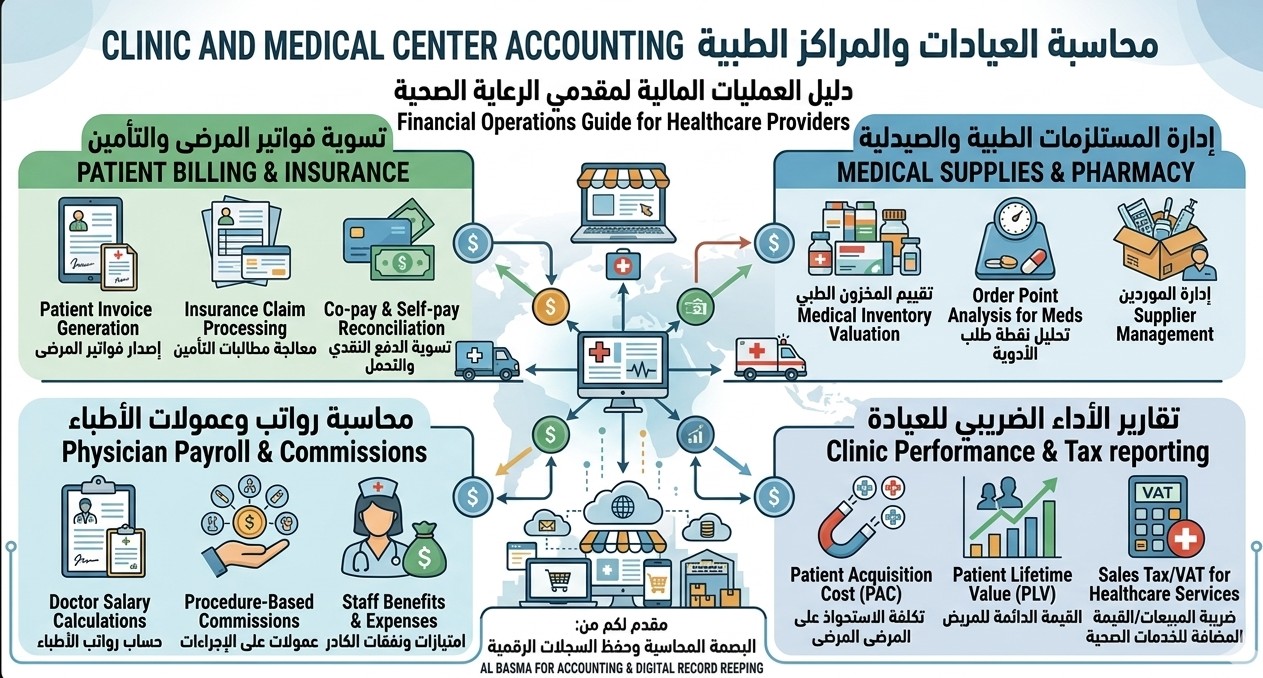
Accounting for clinics and medical centers is different from ordinary trading accounting because revenue may come from cash patients, bank cards, insurance companies, medical claims, co-payments, treatment packages, doctors working on commission, or additional services.

A clinic may also have medical inventory, medicines, consumables, cosmetic materials, devices, doctor contracts, technician salaries, clinic rent, licensing costs, professional insurance, and operating expenses that need clear classification.

Al Basma helps clinics and medical centers organize accounts, follow up insurance claims, reconcile patient revenue, review VAT, prepare Corporate Tax files, and issue clear financial reports for management and partners.

In clinics, the amount collected from the patient or insurance company is not enough by itself. Each visit or medical procedure should be linked to the invoice, claim, doctor, insurer, and payment method.

Why Do Clinics Need Specialized Accounting?

A clinic or medical center deals with a special type of revenue and documents. There are appointments, visits, procedures, tests, medical reports, insurance claims, pre-approvals, amounts paid by patients, and amounts paid by insurance companies.

If these records are not organized, differences may appear between the clinic system, bank, cash, insurance claims, and patient balances. Management may not know whether the issue is delayed collection, rejected insurance claims, unrecorded discounts, or high operating expenses.

The accounting system should therefore connect revenue with patients, doctors, insurance companies, inventory, and expenses so the real profitability of the clinic or medical center becomes clear.

The common mistake is recording collections only, without following up rejected claims, pending claims, co-payments, patient balances, and insurance company balances.

Types of Healthcare Businesses We Serve

Medical Clinics

Organizing patient revenue, doctor visits, tests, cash, card payments, insurance, and daily expenses.

Medical Centers

Managing more than one specialty or department and linking revenue and expenses with doctors, departments, and services.

Dental Clinics

Tracking treatment plans, payments, dental materials, laboratories, prosthetics, insurance, and doctor revenue.

Eye, Skin, and Laser Clinics

Organizing medical services, tests, procedures, devices, consumables, and revenue by service type.

Laboratories and Testing Centers

Tracking tests, company contracts, invoices, claims, medical materials, reagents, and test cost.

Therapy and Rehabilitation Centers

Organizing sessions, packages, repeated visits, collections, insurance, and profitability by service.

Patient Revenue and Insurance Claims

Clinic revenue may be paid directly by the patient, paid by an insurance company, or split between both. Revenue should therefore be separated by payment method, service type, doctor, insurance company, and patient co-payment.

Insurance claims that have not yet been paid, rejected claims, discounts, settlements, and differences between invoice value and approved insurance value should be followed up clearly.

  • Cash patient revenue.
  • Bank card patient revenue.
  • Insurance company claims.
  • Patient co-payments.
  • Discounts or settlements with patients.
  • Treatment packages and advance payments.
  • Pending or uncollected invoices.
  • Rejected or reduced insurance claims.
  • Revenue by doctor, department, or service.

Insurance reconciliation is very important. Not every submitted claim will be collected in full, so rejected, reduced, and pending amounts should be followed up.

Cash, Cards, and Bank Reconciliation

Clinic revenue may appear in several sources: clinic management system, card terminal report, cash report, bank statement, and insurance claim report. These reports should be reconciled periodically.

If the bank statement alone is used, uncollected revenue, pending claims, cancelled invoices, card differences, and bank charges may not appear correctly.

  • Clinic system or medical software report.
  • Daily cash report.
  • Card terminal report.
  • Bank statement.
  • Insurance claim report.
  • Cancelled or amended invoices.
  • Discounts, packages, and advance payments.
  • Differences between system, bank, and insurance reports.

VAT in Clinics and Medical Centers

VAT in the healthcare sector requires careful review because certain healthcare services may be zero-rated where the required conditions are met. However, this does not mean that all clinic revenue, products, or related services should be treated in the same way.

The clinic should distinguish between medical services necessary for treatment or prevention and other services or products that may require different treatment, such as some cosmetic procedures, product sales, medical consumables, non-therapeutic packages, or administrative services.

VAT registration should also be monitored where the clinic makes taxable supplies or imports that may affect the registration threshold, especially when the clinic sells products, imports services, or provides services that are not all zero-rated.

Healthcare Services

We review whether the service is connected with treatment or prevention and supported by clear medical documentation.

Products and Supplies

We review sales of products, consumables, or medical materials and identify the correct VAT treatment for each item.

Invoices and Reports

We review invoices and reports and link them with VAT returns and the correct tax period where the clinic is registered.

Medical Inventory and Consumables

Clinics and medical centers may hold inventory such as medicines, medical consumables, dental materials, laboratory reagents, cosmetic materials, devices, or products sold to patients.

This inventory requires careful monitoring because of expiry dates, wastage, use in procedures, direct sale to patients, and transfers between branches or departments.

  • Medicines and medical consumables.
  • Dental materials, prosthetics, and laboratory items.
  • Reagents and materials used in medical tests.
  • Cosmetic or care products sold to patients.
  • Consumable items such as needles, gloves, and medical supplies.
  • Opening and closing inventory.
  • Expired, damaged, or wasted items.
  • Allocation of materials to departments or doctors.
  • Cost of materials used for each service or procedure.

Medical inventory is sensitive because part of it is used inside medical services, part may be sold to patients, and part may expire or be damaged before use.

Doctors, Commissions, and Revenue Share

Many clinics work with doctors on a fixed salary, revenue percentage, or a combination of salary and commission. Each doctor’s entitlement should be calculated based on actual revenue and the agreed policy.

It should also be clear whether the percentage is calculated on gross invoice value, after insurance deductions, after material cost, or after actual collection, because each method gives a different result.

  • Revenue by doctor.
  • Number of visits or procedures.
  • Collected and uncollected invoices.
  • Insurance claims related to each doctor.
  • Doctor percentage or agreed commission.
  • Deduction of materials or costs where applicable.
  • Monthly doctor entitlement report.
  • Salaries, bonuses, and allowances.

Medical Insurance Claims

Insurance claims are one of the most important areas for clinics. A claim may be submitted, then partially approved, rejected, or reduced because of a medical code, missing document, coverage limit, or insurer policy.

A clear schedule should show the original claim amount, accepted amount, rejected amount, rejection reason, collected amount, and remaining balance.

  • Claim schedule by insurance company.
  • Claim number and submission date.
  • Original claim amount.
  • Amount accepted by the insurer.
  • Rejected or reduced amount.
  • Reason for rejection or deduction.
  • Collected amount and collection date.
  • Remaining balance due from the insurance company.
  • Pending or old claim report.

Payroll and Operating Expenses

Clinics and medical centers have several operating expenses, such as salaries for doctors, nurses, technicians, and administration staff, clinic rent, licensing, professional insurance, maintenance, medical equipment, sterilization, medical waste, systems, and marketing.

Classifying these expenses is important to know the cost of each department or service, review Corporate Tax, and prepare financial reports that help management control expenses.

  • Salaries of doctors, nurses, technicians, and administrative staff.
  • Rent, utilities, internet, and communication expenses.
  • Licensing and professional fees.
  • Professional and medical insurance.
  • Maintenance and calibration of medical equipment.
  • Sterilization and medical waste expenses.
  • Medical software and systems.
  • Marketing and advertising.
  • Daily operating supplies.

Corporate Tax for Clinics and Medical Centers

Corporate Tax depends on the clinic’s correct profit, and correct profit can only be identified after organizing revenue, insurance claims, expenses, payroll, doctor entitlements, inventory, and wastage.

If insurance claims, medical inventory, or doctor entitlements are not clear, accounting profit may be incorrect, and taxable income may also be affected.

Related party transactions should also be reviewed, such as clinic rent paid to a partner, management services provided by a related company, or doctor and administration fees connected with owners.

Documents and Reports We Need

  • Visit or procedure report from the clinic system.
  • Patient invoices and receipts.
  • Cash and bank card reports.
  • Bank statements.
  • Insurance claim, approval, and rejection reports.
  • Insurance company contracts, where available.
  • Doctor reports and revenue by doctor.
  • Payroll, commission, and doctor entitlement schedules.
  • Supplier invoices and medical supply invoices.
  • Inventory, stock count, wastage, and expiry reports.
  • Rent, licensing, maintenance, and insurance invoices.
  • Previous VAT returns and Corporate Tax file.

Steps to Organize Clinic or Medical Center Accounts

  • Review the clinic system and patient visit reports.
  • Reconcile invoices with cash, cards, and bank deposits.
  • Separate patient revenue from insurance claims.
  • Follow up accepted, rejected, and pending claims.
  • Prepare insurance company and patient balance schedules.
  • Organize doctor entitlements based on contracts or agreed percentages.
  • Monitor medical inventory, expired items, and wastage.
  • Classify expenses by department, service, or administration.
  • Review VAT based on the type of service or product.
  • Review Corporate Tax and taxable income.
  • Prepare monthly reports for revenue, expenses, and profitability.
  • Provide recommendations to improve collections, inventory control, and claim follow-up.

Common Mistakes in Clinic and Medical Center Accounting

  • Recording collections only without tracking uncollected invoices.
  • Not reconciling the clinic system with cash, cards, and banks.
  • Not following up rejected or pending insurance claims.
  • Not separating co-payments from insurance claims.
  • Not preparing clear insurance company balance schedules.
  • Calculating doctor commissions without a clear policy.
  • Not monitoring medical inventory or expired materials.
  • Mixing healthcare services with products or other services for VAT purposes.
  • Assuming that all clinic revenue is zero-rated for VAT without review.
  • Mixing owner personal expenses with clinic expenses.
  • Not retaining sufficient invoices, claims, and supporting documents.
  • Filing VAT or Corporate Tax returns without an organized document file.

The biggest risk in clinics is weak insurance claim follow-up. An invoice may be issued, but actual collection may be lower, delayed, or fully rejected.

Financial Reports Needed by Clinics

  • Revenue report by doctor or department.
  • Cash and card patient revenue report.
  • Accepted and rejected insurance claim report.
  • Insurance company and patient balance report.
  • Doctor commission and entitlement report.
  • Medical inventory, wastage, and expiry report.
  • Expense report by department or service.
  • Monthly or periodic profitability report.
  • VAT report by service or product type.
  • Corporate Tax and taxable income report.

Who Needs This Service?

  • Medical clinics operating in the UAE.
  • Multi-specialty medical centers.
  • Dental clinics.
  • Dermatology, cosmetic, and laser clinics.
  • Medical laboratories and testing centers.
  • Physiotherapy and rehabilitation centers.
  • Clinics dealing with insurance companies.
  • Clinics with doctors working on percentage or commission.
  • Clinics with medical inventory or products sold to patients.
  • Medical centers preparing for VAT filing, Corporate Tax filing, or audit.

How Can Al Basma Help with Clinic Accounting?

Al Basma organizes clinic or medical center accounts by connecting the clinic system, invoices, collections, banks, insurance, doctors, inventory, and expenses in one clear accounting process.

We help reconcile patient revenue, follow up insurance claims, prepare doctor schedules, organize medical inventory, review VAT, and prepare the Corporate Tax file.

We also prepare periodic reports showing revenue, collections, insurance claims, inventory, payroll, expenses, VAT, and Corporate Tax so management can make clear operating and financial decisions.

Services Related to Clinic and Medical Center Accounting

Why Choose Al Basma for Your Clinic or Medical Center Accounts?

  • Reconcile the clinic system with cash, cards, and bank deposits.
  • Follow up insurance claims, rejections, and collections.
  • Organize doctor entitlements, payroll, and commissions.
  • Monitor medical inventory, expired items, and wastage.
  • Review VAT based on service or product type.
  • Prepare Corporate Tax, financial statement, and audit files.

Important Notice: The information provided on this page is intended for general informational purposes only and does not constitute legal, tax, accounting, or professional advice. It should not be relied upon as a substitute for reviewing the applicable laws, regulations, decisions, and official guidance issued by the competent authorities in the United Arab Emirates.

The appropriate legal, tax, or accounting treatment may vary depending on the specific facts and circumstances of each case.

If you require professional advice or assistance relating to your particular situation, please contact us and our team will be pleased to review your case and provide appropriate support.


Related Updates and Articles

site menu

Al Basma Accounting & Bookkeeping provides accounting, audit, taxation, financial advisory, expert reporting, and company formation services in the United Arab Emirates.
Al Basma is also an FTA Approved Tax Agency providing VAT, Corporate Tax, and Tax Compliance services in accordance with UAE tax regulations.

Our Services

```
Al Basma Services

Contacts

Call  +971506861518

Whatsapp: 00971525886295

EMAIL : info@albasmaa.com

Financial Solutions


Corporate Tax

To Know our Services, Don't wait call us or leave your Number in online Chat with time you can received our call and we will call you back or send Email to info@albasmaa.com  now.

For join for our team please to send C.V. for Waleed@albasmaa.com